Border Patrol Cover-up Teams & the Valeria Tachiquin Alvarado murder.
But they lied. They never had a warrant. The stop was completely illegal, which means her killing was not justified and a crime.

The following is an analysis of the illegal and secret actions taken by the illegal San Diego Critical Incident Investigative Team under the direction of former Border Patrol Chief Rodney Scott who is currently serving as CBP Commissioner. This follows the analysis of Scott’s coverup using the same team of the Anastasio Hernandez Rojas killing and is further documented by the HBO-Max documentary Critical Incident: Death at the Border which was recently nominated for an Emmy and Peabody Award.
This article is part of Borderland Talk’s Border Patrol Critical Incident Teams (CIT) series documenting the acts of the illegal and secret coverup units that still exist under their parent agency, Customs and Border Protection’s (CBP) Office of Professional Responsibility (OPR). To read other articles and see the history of the coverup teams, see the US Border Patrol Illegal Coverup Teams newsletter in the blog section. This is the only series documenting the teams’ coverups.
While you read this article, think of the recent Renee Good shooting by ICE in Minneapolis, Minnesota. Pay attention to the similarities. Remember that the illegal coverup teams were rolled into CBP-OPR which is now led by the same man who covered up Valeria’s killing.
Note that the CIT for San Diego Sector was called the Critical Incident Investigative Team (CIIT). There are a variety of names used by CITs. For consistency and ease of understanding, I refer to the San Diego team as a Critical Incident Team or CIT.
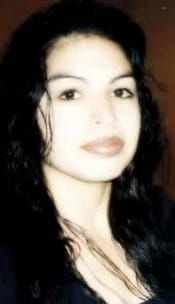
Valeria Munique Tachiquin Alvarado was born in San Diego County in 1980 and was thus a United States citizen by birth. She was killed by Border Patrol Agent Justin Tackett on September 28, 2012 in Chula Vista, California. He shot her “at least nine times.” She was married with five children at the time of her death.
On that day, Agent Tackett along with other Border Patrol agents reportedly went to serve an arrest warrant on Ricardo Ibarra Hernandez in a Chula Vista apartment. Ibarra Hernandez was an undocumented man with a criminal record for possession with intent to sell illegal narcotics and a prior formal deportation. None of the agents were in uniform, and specifically Agent Tackett testified that he did not have his badge showing. Although Valeria was present at the apartment with other individuals, she was not the subject who agents claimed to have a warrant for, nor did she commit any crimes in front of agents.
It is clear from her actions that Valeria wanted no part of whatever was about to go down in that apartment and decided to leave. As she walked to her car, Agent Tackett and his partner, Border Patrol Agent Alexander Roozen, followed her demanding she stop. Both agents testified under oath that neither ever identified themselves as Border Patrol agents.
When Valeria got into her car, Agent Tackett placed himself in front of her parallel parked sedan, while Agent Roozen stood to the side and rear of her vehicle. As one does when exiting a parallel parking spot, she reversed a bit to create room in front so she could pull out. Upon pulling forward, Agent Tackett claimed she nudged his leg with her front, driver’s side fender. He then accused her of assaulting a federal officer and ordered Agent Roozen to shatter her driver’s side window. This exchange was captured on the San Diego Border Patrol Dispatch’s phone line.
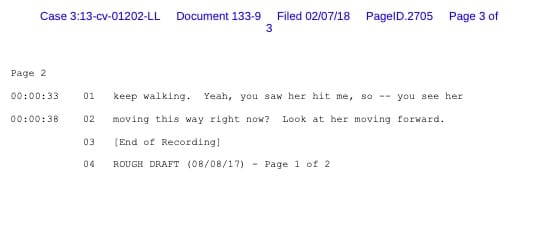
San Diego Border Patrol dispatch.
After Roozen shattered Valeria’s driver’s side window covering her in shards of glass, she again reversed and then tried to pull forward and exit the spot when Agent Tackett again placed himself in front of her car. Agent Tackett then claimed Valeria accelerated towards him forcing him onto the hood of her car and that she drove erratically and fast trying to get him off the car. He stated this forced him to draw his weapon while lying on the hood. He said he let go of the car and held the weapon with both hands as he emptied his gun into Valeria, killing her.
It is important to note that I have written extensively about how Border Patrol agents are trained to bust out car windows. This training is not official: it does not occur at the academy nor in classrooms. It occurs in the field and passed down from agent to agent. It was my training as an agent in 1995. It is still the training today. It is done for the sole purpose of frightening the victim. It is an intentional escalation of violence that often causes victims to panic and hit the gas. This is used to justify the shootings. Every time this happens, Border Patrol teaches agents to say the car was used “as a weapon” against the agent. This pattern and practice is also documented in the killing of Noe Mejia in March 2023.
Today, we see it in the ICE raids in Los Angeles, Chicago, Minneapolis and elsewhere. Pattern and practice: bust the window, victim panics and hits gas, justifies agents shooting, CBP hits the press hard with the vehicle “was used as a weapon and tried to run over our agent.” Rinse, repeat.
Step one of Border Patrol CIT protocol is to control the narrative. In Valeria’s killing, step one had to be performed by San Diego Sector Chief Rodney Scott as his illegal (CIT) Critical Incident Team was unavailable. Instead, he rushed from San Diego Sector Headquarters with the San Diego Sector Intelligence Unit agents in tow. According to multiple witnesses, the Sector Intelligence Unit agents grabbed witnesses and forced them into the back of their vehicles while Chief Scott got in front of the local media cameras. Valeria’s warm, lifeless body was lying in the background as Chief Scott told cameras she tried to kill Agent Tackett with her car.
Chief Scott seemed to know all the facts about the investigation just hours after the killing, proclaiming that it was the agent who was the victim and not the dead mother with nine bullets in her body. The reality was that it was far too early for Chief Scott to have known the facts of the case, and he was repeating what the shooter was claiming. Border Patrol protocol and internal CIT policy required him to set the narrative which is almost always that the agent is the victim.
Scott ordered his Sector Intelligence Unit to act as the CIT unit that day. According to the testimony of former U.S. Marine and witness Prince Watson, the agents handcuffed him and placed him in the back of their car insisting over and over that Watson’s eyes had lied to him. They told him was mistaken. They said he did not see Agent Tackett standing when he shot, insisting he was on the hood of the car fearing for his life. This was an important point as the agency was claiming that Valeria forced Agent Tackett onto the hood by hitting him and that caused him to fear for his life. This “fear for life” is critical in justifying use of force and is stressed constantly in Border Patrol training both in official settings and in the field. But Watson refused to change his statement and was adamant that he saw the agent shoot from a standing position in front of the car.
These statements were made to the Chula Vista Police and to ABC News 10 on the day of the killing. I can find no testimony taken from Watson after this point. He simply disappeared from the case. But, he wasn’t the only witness to say Agent Tackett fired while standing. Witness Patti Ashley testified in the civil trial that Tackett shot while on the hood and after getting back onto his feet. Witness Ashley Guilbeau stated the agent shot while standing. Roberto Flores is another witness who stated he saw Agent Tackett fire while on the hood and while off. But, there were other witnesses who stated he fired from the hood the entire time.
This confusion in testimonies is not unusual in shootings. It is a well documented phenomena and why every witness, every bit of evidence must be evaluated before addressing the public. As is seen in this case and every shooting by Border Patrol agents, the policy of the agency is to ignore the best practices of not discussing on-going cases and simply repeat what they want the evidence to be. This influences potential future jurors and public opinion. It also pressures local police and prosecutors to not file charges, which is the goal of setting the narrative.
The day that ended Valeria’s life saw multiple local reports repeating the agency’s narrative. “The suspect was armed with a vehicle, and literally ran our agent down,” Chief Scott continued commenting on the investigation. Chula Vista Police told the press that Valeria had “assaulted” the agent with her car, and that agents were in the process of “serving a felony warrant.” It was reported that the agent who killed Valeria was hospitalized for his injuries even though they later admitted he had none. Before night fell, they began reporting the victim had a prior drug conviction, though no drug or alcohol tests were performed on the man who killed her. (1)
Five days later, every article reported that Valeria had been on probation for methamphetamine at the time of her killing. A Chula Vista Police spokesperson told the press the victim had three prior arrests for drugs, that she was present at a known “drug apartment.” And while they were killing the victim a second time by trashing her character in the media, they continued to lie to the press repeatedly stating that the Border Patrol agents had a “felony arrest warrant” and had identified themselves. The spokesperson added that the agent who killed Valeria had been released from the hospital, making it sound as if he had been hospitalized for five days when he had not been. (2)
A week after the shooting, people took to the streets to protest Chief Scott and his agents’ brutality. The press continued to repeat Chief Scott’s claims that Valeria had intentionally hit Agent Tackett and that she was a drug user. This was when questions began to emerge about the Border Patrol’s version of events. While there were witnesses who agreed with the cops that the agent was on the hood while shooting, others agreed with witness Prince Watson that he was standing while shooting, more witnesses were coming forward and publicly stated that was not true. Ayanna Evans stated said Agent stood in the street and fired as Valeria slowly backed up. “She looked confused,” Evans said. “She was backing up and he was going toward her, then he pulled out his gun and shot five times.”(3)
Then, news about misconduct began to emerge. While still refusing to report his name, local media stated Agent Tackett had previously been a deputy with the Imperial County, CA Sheriff’s Office before being hired by the Border Patrol. While a deputy for a only short time, Tackett had a robust history of suspensions for “incompetence, violating rules of conduct” and conduct unbecoming of an officer. (4)
On October 14, 2012, a full two weeks and three days after Valeria was killed, the media finally named Agent Tackett as the killer and began to dissect his past. He had been suspended four times in his four years as a deputy in Imperial County. In one case he crashed a patrol car. In another, he was accused of disobeying a direct order and “providing false and misleading information” during an investigation. In yet another case, he reportedly locked a man in the back of his patrol car and turned the heater on full blast. (5) It is important to know that the Imperial Valley is a literal desert.
Then, the U.S. Border Patrol and chatty Chief Scott became quiet. When asked about Agent Tackett’s past misconduct, both the Border Patrol and Chula Vista PD suddenly found their ethics and stated they could not talk about on going investigations for fear of influencing the case. But this did not stop the Border Patrol Union from joining in and claiming through then union vice-president Shawn Moran, “If the agent says his life was threatened and he needed to use deadly force, we’re going to back him and accept his statement at face value.”
Returning our attention back to the CITs - Chief Scott was able to use another unit (Sector Intelligence Unit) to act as the CIT that day when they were unavailable. This suggests to me as a former senior sector intelligence agent that it was likely Chief Scott who acted as the CIT lead that day ordering them to grab witnesses and lock them in their cars. We only see the CIT agents once the investigation moved from the scene in Chula Vista to the interview rooms.
The following was gleaned from PACER court records. Neither the Chula Vista Police Department nor the Tachiquin Alvarado family attorney, Eugene Iredale would cooperate for this analysis. CIT report - #12098F1.SDC. Chula Vista PD report - #1212738. U.S. District Court, Southern Californa (San Diego) #13-cv-1202-LL.
Agents assigned to the illegal San Diego Sector CIT at the time and involved in the investigation were Supervisory Border Patrol Agent Brian Smith, Senior Patrol Agent Joe Vaiasuso (also seen in the Anastasio Hernandez Rojas coverup) and agents Amy Mattraw, Tracey Wong, Elisabeth Berry and Robert Butler. Demonstrating how many killings these agents covered up, just a year after working on Valeria’s killing, Border Patrol Agent Tracey Wong was allowed to conduct an entire homicide investigation into a U.S. citizen who died in custody without any authority whatsoever. Steven Keith’s family has never received a legal investigation into his death at the Campo, CA Border Patrol station in 2013 thanks to CIT Agent Wong.
CIT Border Patrol Agent Tracey Wong attended the Chula Vista PD interviews of Border Patrol agents involved in the killing of Valeria. Wong even questioned her fellow agents directly during the supposed “independent investigation” as if she were an accredited homicide investigator. She was also present at the interview of Agent Roozen on the day of the killing and at the autopsy.
A full five days after killing Valeria, Agent Tackett finally sat down to be interviewed by Chula Vista investigators. Again, Border Patrol CIT Agent Wong was present. With Agent Tackett was his union attorney who he had been consulting with since the shooting had occurred. As was demonstrated in the Anastasio case, union attorneys have access to CIT reports. Agent Wong then returned to the CIT office to write reports on what the Chula Vista PD investigators were finding in the interviews. This is done to assist the chief and the press information office with continued narrative framing. It is something not afforded to other people accused of homicide.
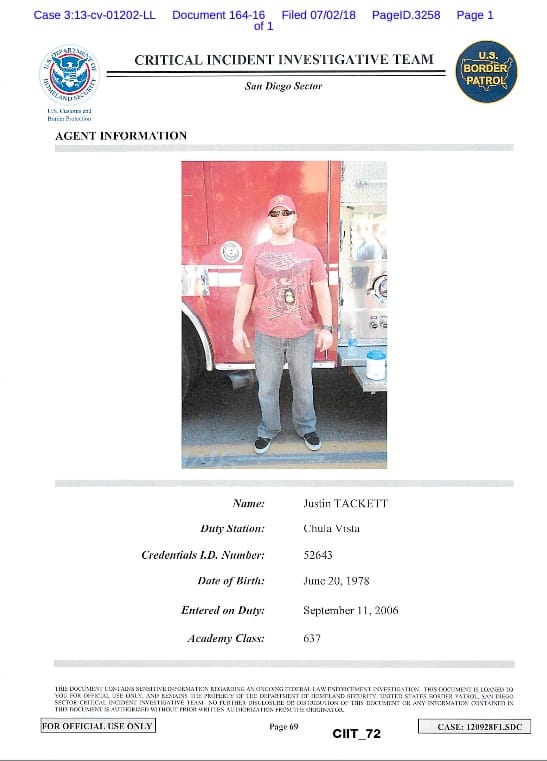
Below is an example of the illegal CIT work. Note that Agent Tackett’s badge is visible in the CIT official report even though he testified that it was not. In an investigatory report, this is considered to be tampering with evidence because it was not true. This demonstrates that CIT reports contain information that helps establish the narratives set by the agency. It did not matter that Agent Tackett testified that his badge was not visible and that he did not identify himself. This picture is evidence taken by the illegal CIT and a statement that his badge was visible, without having to make a false statement on a government document, which is a crime.
Only after the criminal prosecution was denied was it finally revealed through discovery in the civil suit years later that none of the agents had obtained a search or arrest warrant, making the entire attempted stop of Valeria completely illegal. Border Patrol agents did not and still do not have knock-and-talk authorities and are required by law to have warrants. But the illegality of the stop was no longer in question because local, state and federal authorities had already declined to file charges against Agent Tackett.
The entire purpose of Chief Scott running down to the scene and standing with Valeria’s bloodied body riddled with Border Patrol hollow points in the background, the whole point of leaking out to the media that she had prior drug arrests and leaking out the autopsy findings, the reason the Border Patrol kept repeating to the press that they had a “felony warrant” was so that local, state and federal officials would decline to prosecute the case. If they had a warrant, then the stop was legal.
But they lied. They never had a warrant. The stop was completely illegal, which means her killing was not justified and was therefore a crime of murder.
In the end, five children were left without their mother. The family got a settlement; a large chunk went to his attorney. Agent Tackett was moved to another sector. In the U.S. Border Patrol, he is heralded as a hero for pulling the trigger. None of the CIT nor the intelligence agents were held accountable. The illegal CITs were moved under CBP after their illegality was exposed. Chief Rodney Scott went on to become the Chief of the U.S. Border Patrol, and currently serves at the Commissioner of CBP. He testified recently before Congress that he is using his old CIT agents who were moved to CBP to evaluate the evidence in the Alex Pretti killing.
Valeria’s murder was part of why the Police Executive Research Forum released a report in 2013 evaluating Border Patrol shootings. PERF found that agents routinely placed themselves in front of cars causing the shootings.
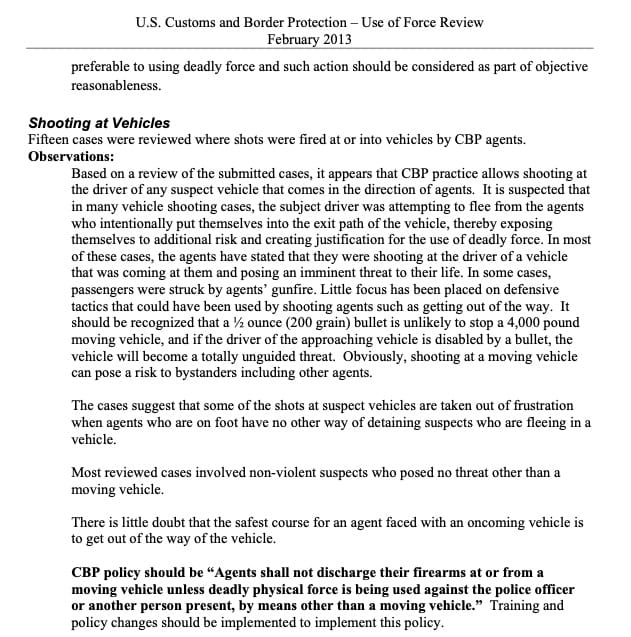
This, of course, has not stopped agents from placing themselves in the path of cars and shooting at people in cars. That is because no agent has ever been held accountable. And if they are never held accountable, then why stop doing it?
- Stickney, R. and Chan, Chris. (2012, September 28). U.S. Customs and Border Protection involved in Chula Vista shooting. NBC 7 San Diego News.
- Handy, Shannon. (2012, October 2). New details in Border Patrol shooting investigation. CBS News 8.
- Marosi, Richard. (2012, October 4). Border Patrol agent’s shooting of woman brings protests. Los Angeles Times.
- Bacchus, Dayna. (2012, October 12). Family officially files claim against Border Patrol. NBC 7 San Diego News.
- Wrongful death claim filed in SD Border Patrol shooting. (2012, October 14). The Associated Press.
- Id.