Battalion Search and Rescue
BSAR is dangerous to the living. I cannot in good conscience support their work.

Content warning: This is an essay on searching and finding migrant bodies on the southwest border. There are no photos of these remains attached, but readers may find the descriptions traumatizing.
I have known James Holeman, leader of Battalion Search and Rescue (BSAR) for years. I have always found him to be aggressive and dismissive of the communities he works in. I can name many organizations, reporters or government agencies from California to Texas who have been targeted by his verbal abuse; something he readily admits to. He says it comes from his service in the Marine Corps, from his PTSD and recently he claims to be suffering from mental health issues related to his work which I do not doubt. I have not been able to confirm any of these claims independently.
In the last few years, James added Abbey Carpentar who is his life partner to BSAR. Abbey brought organization and structure to the group and a kinder, gentler approach. When they told me about combing the Chihuahua Desert in Dona Ana County, New Mexico, I was intrigued by their claims that they were finding an unusually high number of women’s remains. As time went on, forensic anthropologists and other experts evaluated the data on the deaths from the El Paso, Texas/Dona Ana County corridor. They also expressed concerns about the high percentages of remains being women and girls. All along the southern border, that percentage is normally between 12-18% according to Humane Borders and No More Deaths analysis. The El Paso/Dona Ana County area that BSAR was now working was seeing 55%.
The more that BSAR searched this area, the more they found and the more resistance they received from El Paso Border Patrol management who was happy to leave the bones lying in the desert. This meant the responsibility for recovery was passed onto the Dona Ana County Sheriff’s Office led by Sheriff Kim Stewart and the New Mexico Office of Medical Investigator (NM-OMI). Both agencies have stated for years that they are overwhelmed with work and do not have the funds for these recoveries. Both correctly believe the deaths are the responsibility of the U.S. Border Patrol and the federal government. Over the last five years, local Latino and Indigenous rights groups worked with the Dona Ana County Sheriff’s Office to have the remains collected and the NM-OMI hired five more investigators.
Community groups stated to me that this progress ended when James took to social media (predominately Facebook) to accuse the agencies and their employees of not caring and covering up the deaths. Sheriff Kim Stewart responded with accusing BSAR of planting bones in the desert and digging up ancient Indigenous burial sites. I have seen this standoff often on the southern border before: groups understandably accuse agents of not caring or even covering up the human rights atrocities and the law enforcement agencies and investigative units respond by refusing to collect and analyze the migrant deaths. In the last two years, BSAR’s work has filled the border news grabbing headlines left and right. Rolling Stone did a piece specifically putting a face and a story to the skeletonized remains of Ada Guadelupe Lopez Montoya. I encourage you to read it.
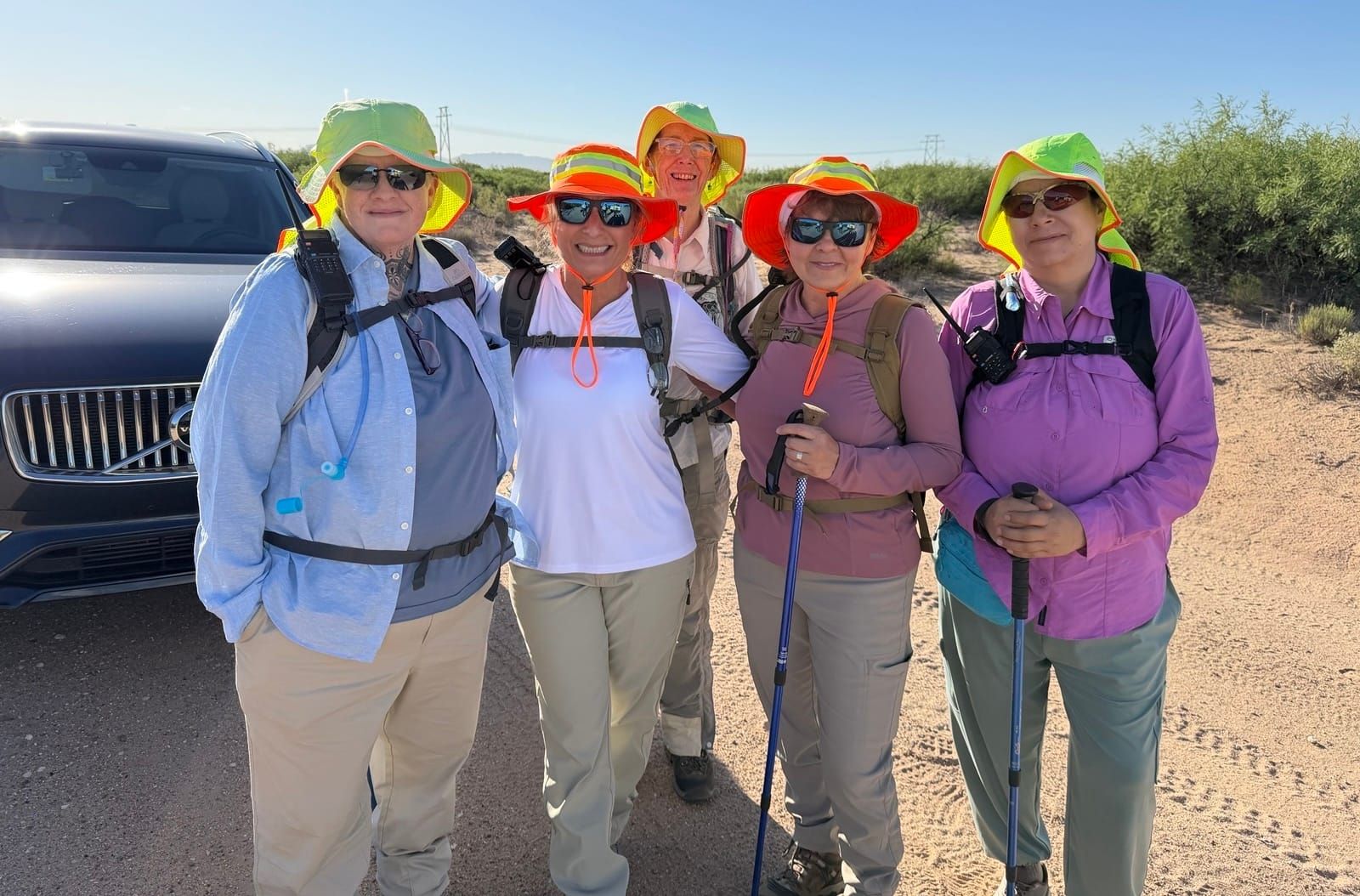
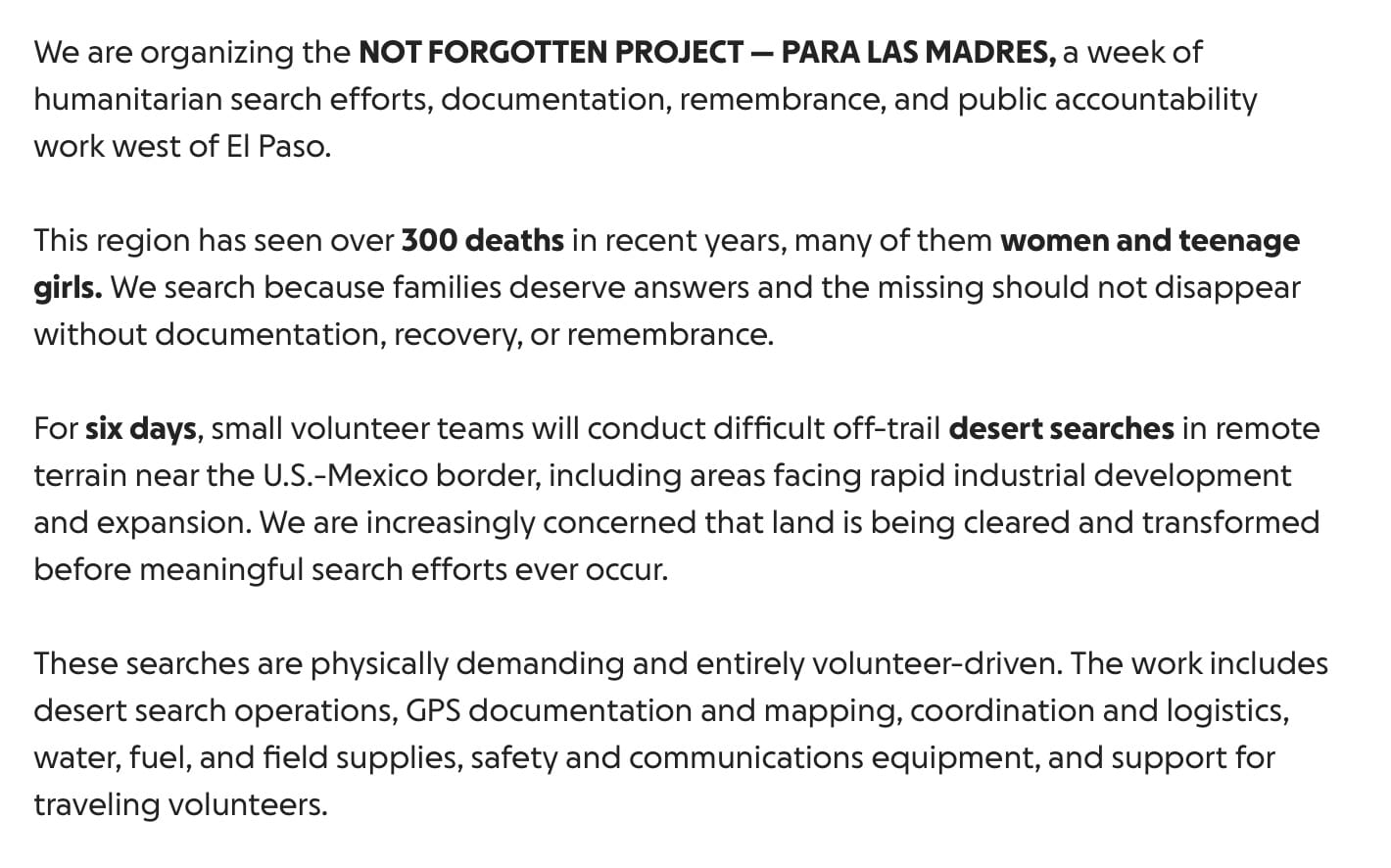
So, when James and Abbey asked me to help draw attention to this area by attending a weeklong search with other volunteers, I did not hesitate to try an uncover more of this atrocity. I recruited a fellow writer and her aunt, Lisa and Kim Gonzalez from Ohio to join me. Neither had ever experienced the border, and I wanted to see how they processed and interpreted thirty years of death by policy. Our goal was to document and create content for BSAR that would call more attention to this area where women and girls were dying at never-before-seen rates. BSAR likes to brag that their volunteer groups are predominately women searching for women. They have endless stories like the one about a minivan full of nuns from El Paso. Our first day was no different. I felt honored to be a part of this search as I know both Lisa and Kim did.
Knowing my limits, I promised only two miles on day one in the nearly one-hundred-degree temperature. I completed my goal, and then promptly got heat sick as the others went back out for another two miles. James kept reminding them all to drink water, but dehydration is not the only danger. If the human body gets to one hundred and five degrees for more than thirty minutes, heat stroke and permanent damage to the brain and death can occur. As an agent, I have witnessed this. The pain suffered is the stuff that still fills my dreams.
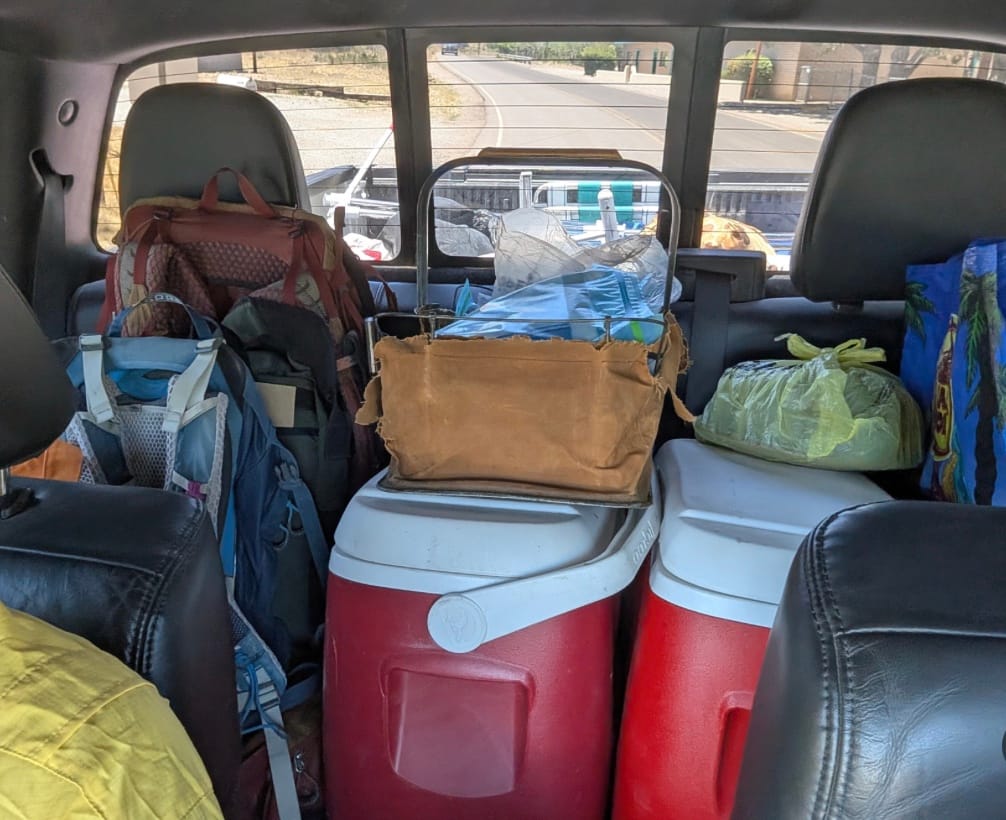
Supplies touted for volunteers that never existed.
I recalled the picture in BSAR’s GoFundMe campaign of red coolers and other supplies. They said donations were needed to support the volunteer searchers, and we helped them raise thousands. Back at the truck, I found only the water I brought and an old milk crate with a dozen or so small bottles of water and Gatorade baking in the sun. I could find no ice packs, no coolers with ice, no basic medical kit to help lower my core temperature. As an agent, I hiked every single day with ice packs that saved many a migrant and agent. As an immigrant rights worker for the last eleven years, I never venture into the deserts without a cooler of ice and water. I have watched reporters go down from the heat in the middle of interviewing me, and I returned their body temperature to normal by placing a cold-water bottle on their necks. This is basic first aid training.
When other migrant search and rescue groups enter the deserts, they maintain protocols for the safety of the searchers. Volunteers who provide support often outnumber the searchers. They maintain an area near the searchers with shade, water, ice packs, food, medical kits and care. Many groups today use satellite phones and Starlink because there is such poor cell service. If someone needs to be life flighted, this is often the only means of outside communication. There was none of this for the volunteers of BSAR save for the ice pack Abbey used to make sure her phone did not overheat.
Lisa and Kim insisted on finishing what we started and went back out on day two while I nursed my heat sickness at the hotel. They said James seemed angry from the moment they got into the truck. Upon getting to the desolate area, he informed the group they were in an area with lots of Border Patrol action. This sent a panic into Lisa who is Latina and had requested multiple times to be warned if they were going to be in a heavily agent saturated area. She was stuck. They had expected four miles but were taken for over six. James barked at her for taking a picture before they headed out claiming there was no time for social media even though creating content was what they asked us to do. At one point, James became enraged with the women who were struggling in the excessive heat to keep each other in line and in site. Abbey stated to volunteers that she had to get away from him when he gets this angry, and she helped another female volunteer who was becoming heat sick get back to the road. James did not ask if she was okay but commented on how losing two searchers would prevent them from finding more bodies. It was Kim and Lisa who gave her their salt tablets and provided her with aid, not BSAR. James continued yelling at Kim and Lisa to get back into line and then suddenly took off so fast that none of the searchers could keep up. They called him on the radio asking him to slow down. Later, he claimed his radio was not working. His rage apparently prevented him from following his own protocols of keeping everyone in his site. Once back at the truck, as Kim and Lisa reached up to two volunteers standing in the bed of the truck to climb aboard, James hit the gas leaving the women standing on the road and nearly caused the two in the bed to fall as he drove away to pick up Abbey and the volunteer who had reported feeling ill. Lisa and Kim were eventually dumped back at the hotel without any food, dehydrated and feeling abused by James. All these statements were backed up in texts between the other volunteers present on that day.
It was not lost on me that in his anger, it was James who left the all-female volunteers in the desert just like a “coyote” or smuggler had left the migrants he was so desperately seeking.
I brought Lisa and Kim out to the desert and was not going to let this behavior slide. On day three, I called for a meeting with BSAR in our hotel lobby. I recorded the conversation because I no longer trusted James. Kim and Lisa opened with how passionate and dedicated they were to this work and how appreciative they were for BSAR’s efforts before stating that the yelling and verbal abuse was not acceptable. James smirked and laughed at them claiming they were not telling the truth. When I asked him if he was saying they were lying, he told me that I knew how being in the field was. I reminded him he was never a Border Patrol agent and these volunteers are not agents. He continued excusing his abusive behavior, blaming his military service, his PTSD and trauma from finding bodies. I admittedly lit into him saying they volunteered to spend a week searching, left their families, spent their own money and that this is not how volunteers or anyone should be treated.
Every critique was met with excuses or statements that they had found over ninety bodies and that they knew what they were doing. It was clear to me that this meant they were not to be questioned. In reading the history of BSAR through the media, this number of bodies or remains found is in constant flux. Sometimes they say they have found over two hundred bodies, sometimes they say they have found over a hundred “sites.” Officially, in the area we were working, the statistics say BSAR has located twenty-seven full human remains in three years. I pointed out to him that he had found zero remains in the sixteen miles they had covered in three days. I asked if he was concerned knowing that the sheriff and others were likely watching this event because he had been claiming the desert was littered with women’s bodies and he had so far found nothing. He stated, “I would be lying if I said I was not concerned.”
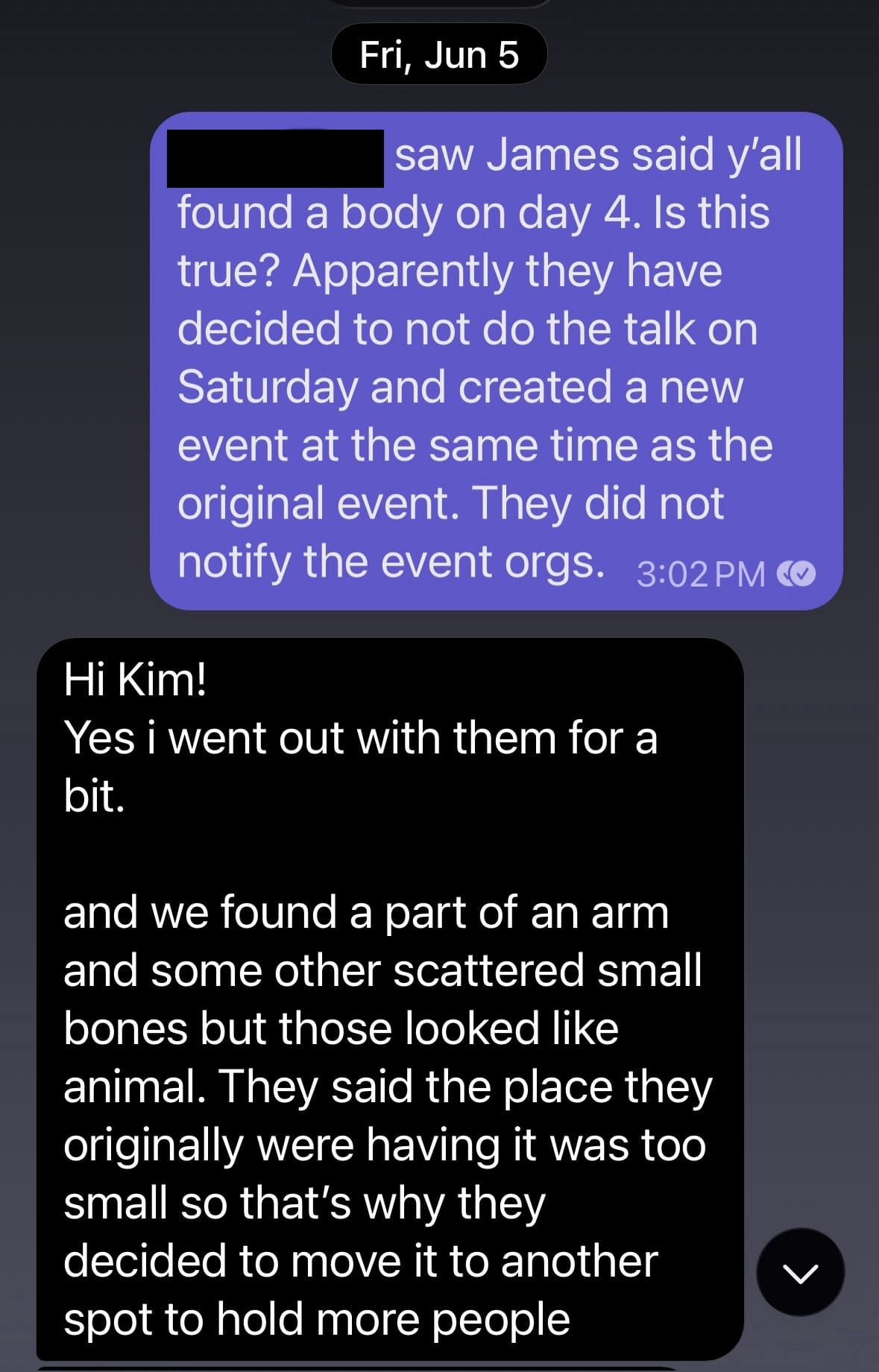
The following day when Lisa, Kim and I took the day off, James stated on Facebook that they had found a body. Kim connected with the other volunteers who stated they found one arm bone, not a body or set of remains. One of the reasons I wanted to come to this area was that the numbers thrown out by BSAR did not make sense to me. Abbey stated multiple times they go out once a month. For the two to three years that they claim to have been working this corridor, they could not have found the ninety to over one hundred bodies and or “sites.” It simply is not possible. They get to these numbers by adding in searches from Arizona and California that James has done since 2018. It would also seem that they consider one bone perhaps left behind from a recovery effort to be another body or site with remains. This is likely to lead to double counting. James has since changed the post to say he found a “site with remains.” Reports from independent media put their finds in this corridor at twenty-seven; not seventy-five, not ninety, not one hundred and seventeen. This is misleading to families desperate to find loved ones and those donating to their work.
There is a difference between “search and rescue” and “search and recovery.” Although Abbey is fond of saying she believes her work here is a rescue, it is not. She stated to me they have never found a body with flesh, only bones in this area. It takes roughly nine months to a year for a body to become fully skeletonized in that environment. That distinction between a “rescue” and a “recovery” is important. In a rescue, agents and volunteers often take risks to save a life. In a recovery, the life of the searchers is the top priority. The remains will still be out there, and the goal must be to not add another body to the count. There is no need to search for remains in such temperatures that have already taken thousands of lives. More so, to claim you are rescuing women by taking women out in the same conditions without support and without basic medical needs and then to abuse them verbally makes me question why BSAR does these hikes at all.
I spent the rest of the week listening to local scholars, law enforcement and meeting with leaders of Latino and Indigenous rights groups. Every single one told me how James’ aggression and verbal abuse, his targeted attacks against the sheriff, the deputies and the OMI on social media that are riddled with misogyny have now caused the agencies to stop working towards a solution with the community. Every single person, agency, non-profit group, academic and reporter I spoke to about BSAR demanded I not use their names for fear of retaliation. Specifically, the women who have been targeted by his abuse describe long emails and texts from James filled with threats and accusations. I was warned that should I write this, he would come after me.
James has since created a video claiming without naming Lisa and Kim that they were just interested in a “nature hike.” These two women are in great shape. Neither one gave in. They completed each hike without complaint and were the ones providing medical assistance to one of BSAR’s regular volunteers. This video is simply more abuse by James.
To be clear, the work BSAR does is extremely important. Every single body or remain deserves to be returned to their families. At the same time, James and Abbey are not Latino/Indigenous and that requires sensitivity of the community that I did not witness from BSAR. James creates video after video showing the remains and suggesting they are somehow related to Zorro Ranch or a serial killer when there is no evidence. He is using Ai slop to target officials while claiming that a picture of a mandible or hair lying on the desert floor is somehow identifiable. It is not. That is clickbait, pure and simple. There are thousands of families out there watching groups like BSAR on Facebook. When they see hair, an arm bone, a skull, it gives them hope that they have found their beloved. This increases clicks, shares and donations made in desperate hope while the identities of the missing will remain unknown without cooperation with the sheriff and the NM-OMI.
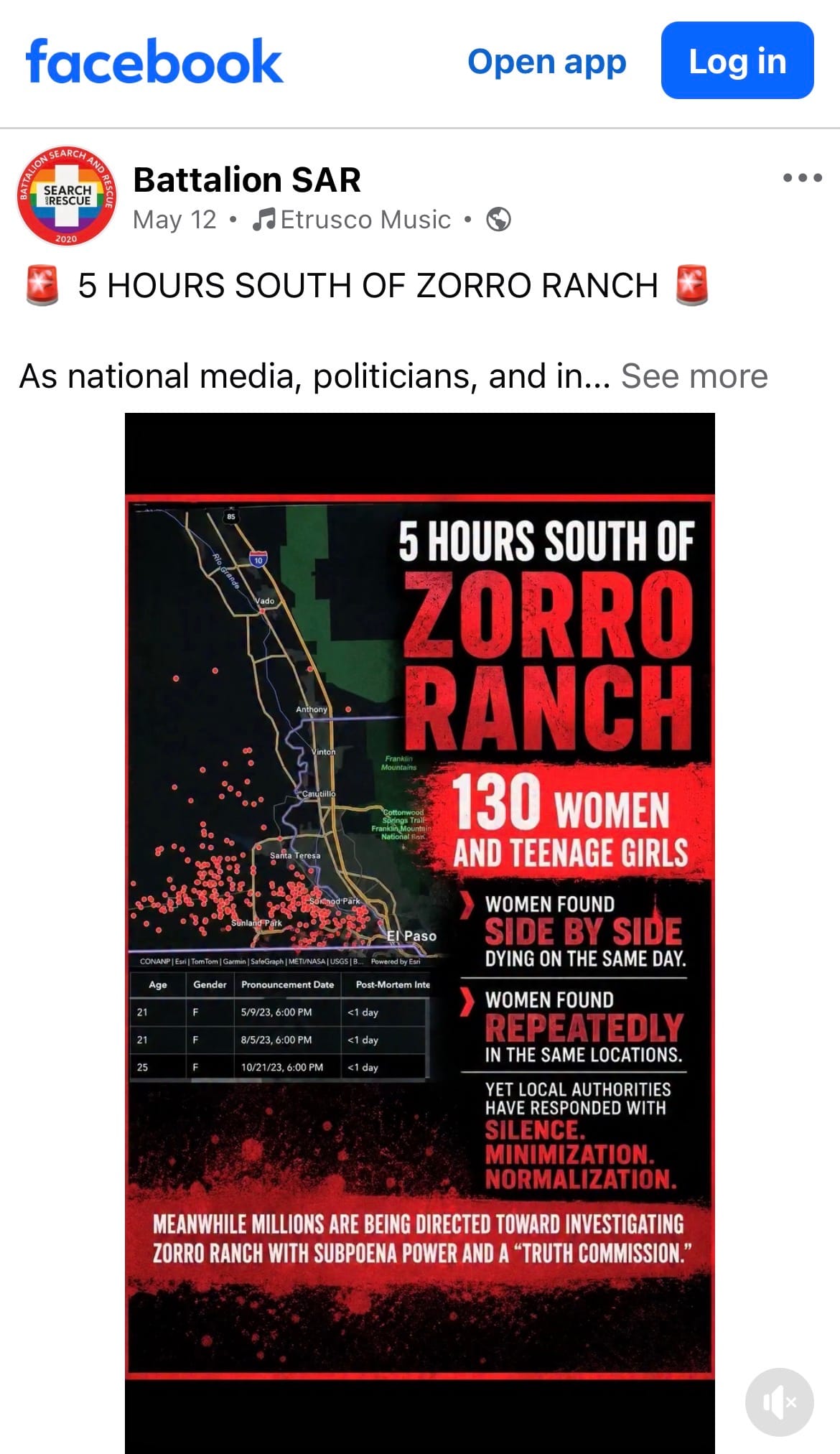
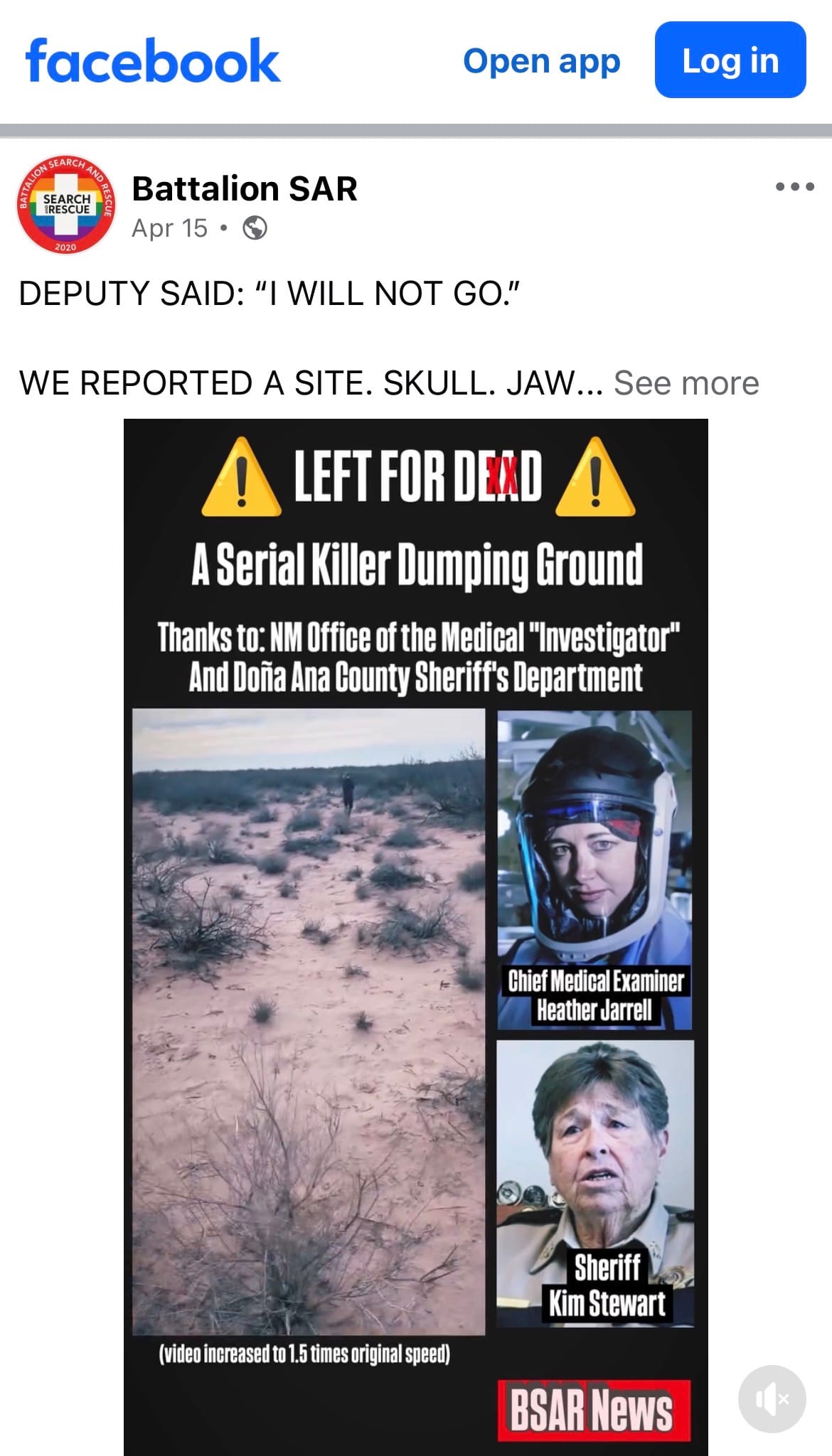
BSAR clickbait. There is no evidence that the bodies being found are related to the Epstein cases or a serial killer. All evidence collected to date indicates the victims are part of the U.S. Border Patrol’s deterrence policies.
The story I thought I was going write about has drastically changed. This is what happens when groups with good intentions make the work of recovering the deceased about themselves and about donations. The truth is that it does not matter how many remains BSAR finds if they cannot work with the agencies who are the only ones able to collect, identify and return them to their loved ones. Those bodies will stay on the desert floor thanks to the immense damage BSAR has caused within the community. This serves no one except for BSAR.
The showing of migrant bodies is expressly prohibited by the Latino and Indigenous communities along the southern border unless it is done with their consent and guidance. This is because groups like BSAR have used these shocking pictures for fundraising. James is notorious for this blatant abuse and even got me accused of somehow being involved with one of his pictures when I was not. I have personally had to demand he stop sending me pictures because he sent me one of a newly deceased woman who I could tell had been sexually assaulted. He did this knowing full well my history of sexual assault survival. James has been asked by communities all along the southern border to stop showing videos and pictures of dead migrants, and still he refuses.
I do not know what BSAR uses their donations for. James told me he recently bought a $6,000 professional grade drone, but now they need to purchase a custom-built computer just to fly it. For what it’s worth, basic drones costing around $1,500 would do the job just fine. But the funds they claim to be raising to support the volunteers are not being used for the volunteers.
I have never in my years as a Border Patrol agent, as an immigrant rights activist, as a historian of Border Patrol policies, as a border resident for thirty years seen such a dangerous search and rescue/recovery operation. I have never witnessed so much cultural appropriation and disregard for the communities that must live and work with these agencies. I can safely say that it is a matter of time before one of their volunteers becomes so ill that they suffer irreversible harm or death. And when that happens, BSAR will not be able to provide basic medical care. They will be lucky if their cell phones work to call for help. They will be even luckier if the Dona Ana County deputies or even the Border Patrol respond.
BSAR is dangerous to the living. I cannot in good conscience support their work.